When disaster hits, who checks the crowd?
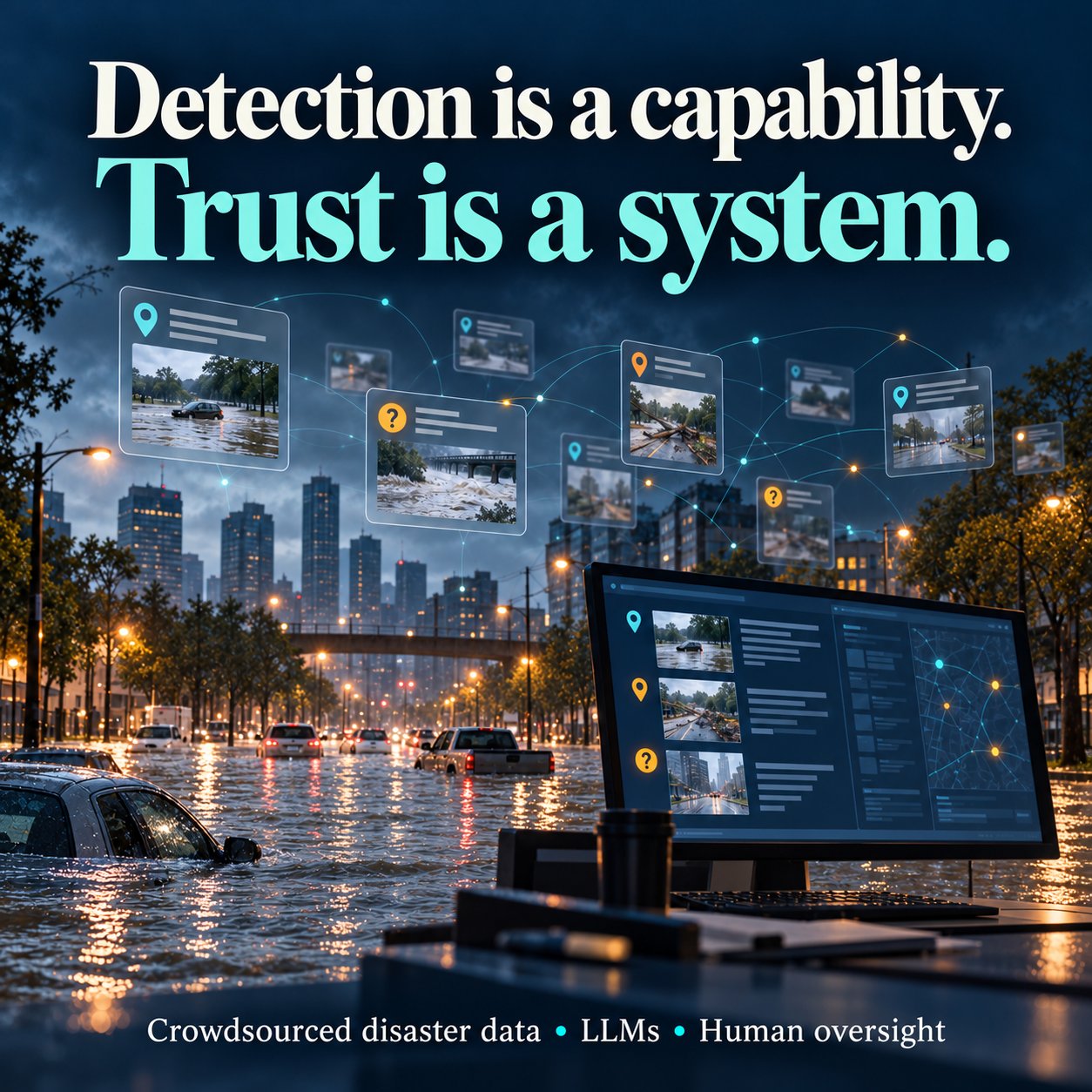
When a disaster hits, the first reports often come from the crowd. So does the first wave of misinformation.
Our paper accepted at ICT-DM 2026, “Misinformation Detection in Crowdsourced Disaster Data Using LLMs,” reviews how large language models are being used to separate credible reports from false ones when time matters most.
What stays with me from this work is less the model than the workflow around it.
An LLM can flag a suspicious post in seconds. It cannot tell you whether the people acting on that flag understand its limits. In a crisis, a wrong flag can bury a real call for help, and a missed one can send resources to the wrong street.
So the questions I would ask any emergency management team, newsroom, or platform piloting these tools are practical:
- Who reviews the flags?
- What happens to reports the model is unsure about?
- How do you test the tool on local language and local context before the next emergency, not during it?
Detection is a capability. Trust is a system.
If you work in emergency response or public communication, how are you vetting crowd reports today?
Join the conversation on LinkedIn.